
When someone sends you a message like “Wut?” or “Wut are you doing?”, you may wonder what they mean. Is the person confused, surprised, joking, or asking you to explain something?
If you see this word in a text message, Instagram comment, Snapchat chat, or online game, its meaning can depend on the situation.
The good news is that wut is an informal spelling of “what.” People often use it in casual conversations because it feels relaxed, playful, or more expressive than standard spelling. It can also show surprise, disbelief, or confusion when someone reacts to unexpected news.
Many people search for what does wut mean in text because they want to understand the message behind this unusual spelling.
While the basic meaning is simple, the tone can change depending on the words around it, the relationship between the people chatting, and the topic being discussed.
In this guide, you will learn the common meanings of wut, how people use it in real conversations, whether it sounds rude or flirty, and how to reply naturally. You will also discover similar slang terms and when it is better to use standard English instead.
What Does “Wut” Mean in Text?
Wut means “what” in text messages and online conversations. It is an informal spelling used to ask a question or express confusion, surprise, or disbelief. People may write “Wut?” when something seems strange or unexpected, or use “wut” instead of “what” to create a casual, playful tone.
For example, someone might text “Wut are you doing?” instead of “What are you doing?” The message has the same basic meaning, but the spelling makes it feel less formal.
The most common interpretations include:
- What? Asking a question or requesting information.
- Confusion: Showing that something is unclear.
- Surprise: Reacting to unexpected news.
- Disbelief: Suggesting that something sounds hard to believe.
The exact meaning depends on the conversation. A short message like “Wut?” might be a genuine question, a playful reaction, or a sign that the sender did not understand your previous message.
The Most Common Meanings of “Wut”
Although wut usually means what, people use it in several ways. Understanding these common uses can help you read the message correctly.
1. Wut Means “What?”
The most direct meaning of wut is simply what. People use it to ask questions in casual chats without worrying about standard spelling.
For example:
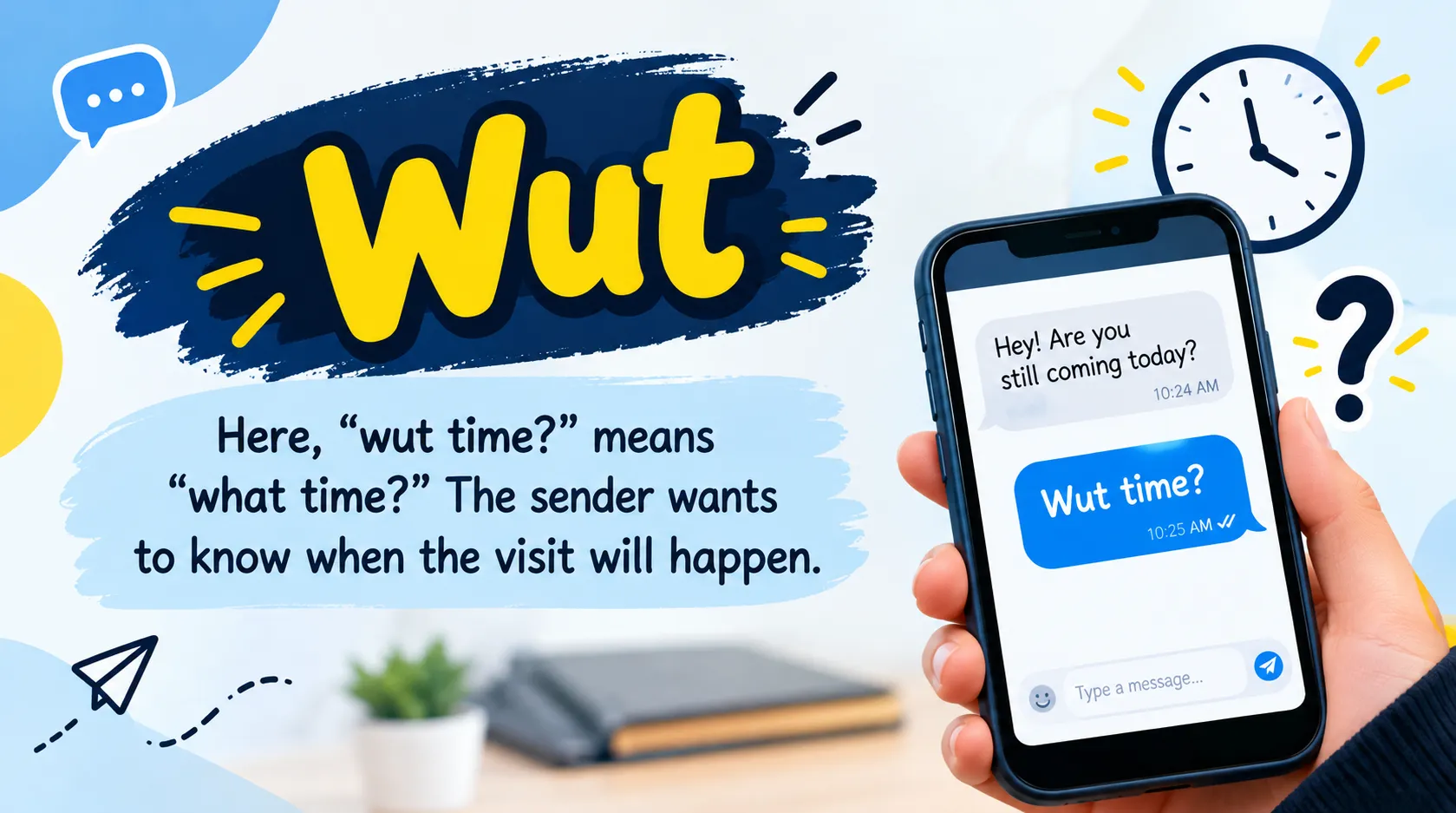
Person A: “I might visit you tomorrow.”
Person B: “Wut time?”
Here, “wut time?” means “what time?” The sender wants to know when the visit will happen.
Another example:
Person A: “Did you see my new shoes?”
Person B: “Wut shoes?”
The second person is asking which shoes the first person means.
This use is common among friends, classmates, and people who regularly chat online. It is usually not meant to carry any special emotion.
2. Wut Shows Confusion
People often type “Wut?” when they do not understand something. It can be a quick way to ask someone to explain their message.
For example:
Person A: “The meeting was moved to yesterday.”
Person B: “Wut? How is that possible?”
The sender is confused because the statement sounds unusual or difficult to understand.
Another example:
Person A: “I sent you the file last week.”
Person B: “Wut file?”
In this case, the person does not know which file is being discussed.
When wut appears alone, especially after an unclear statement, it often signals confusion. However, it does not always mean the sender is upset. They may simply need more information.
3. Wut Shows Surprise
Another common use of wut is to react to unexpected news. The spelling can make the reaction look more dramatic, playful, or spontaneous.
For example:
Person A: “He bought a new car yesterday.”
Person B: “Wut! Already?”
The reply shows surprise. The person did not expect the news and wants to express that feeling.
Another example:
Person A: “I got the job!”
Person B: “Wuttt, that’s amazing!”
The extra letters make the reaction feel more excited. In this context, the sender is probably happy or impressed rather than confused.
People also use “Wut?” when someone shares surprising gossip, announces a sudden change, or reveals something unexpected.
4. Wut Shows Disbelief
Sometimes, wut means that a person finds something hard to believe. It can be similar to saying, “Are you serious?” or “Really?”
For example:
Person A: “I finished the entire project in one hour.”
Person B: “Wut? The whole thing?”
The reply suggests that the person is surprised by the claim and wants confirmation.
Another example:
Person A: “She said she never watched that movie.”
Person B: “Wut? Everyone has seen it!”
Here, the sender finds the statement surprising and reacts with disbelief.
Disbelief can be friendly or negative. A person might be impressed by what you said, or they might doubt your story. Look at the rest of the conversation before deciding which meaning fits.
5. Wut Is Used for Humor or Playfulness
Some people use wut because it looks funny or gives a message a relaxed internet style. In these cases, the unusual spelling is part of the joke.
For example:
Person A: “My cat stole my sandwich.”
Person B: “Wut is wrong with that cat?”
The spelling makes the reply feel playful rather than serious.
Another example:
Person A: “I accidentally wore two different shoes.”
Person B: “Wut are you doing with your life?”
The second person is probably teasing their friend in a humorous way.
This use is common in memes, gaming chats, social media comments, and conversations between people who know each other well.
How “Wut” Is Used in Real Conversations
The meaning of wut stays close to what, but its tone can change across different platforms and situations. Here is how people may use it in everyday digital conversations.
Friends & Casual Texting
Friends often use wut when they want to ask something quickly, react to news, or joke with each other. Since casual texting does not always follow formal grammar rules, an informal spelling can feel natural.
Examples:
- “Wut are you doing tonight?”
- “Wut happened at school?”
- “Wut? You already finished?”
- “Bro, wut are you talking about?”
These messages can express curiosity, surprise, or confusion. The relationship matters, too. A friend who regularly jokes with you may use wut without any negative intention.
However, a message such as “Wut do you want?” can sound impatient if the conversation is already tense. The words around it matter more than the spelling alone.
Instagram & Snapchat
On Instagram and Snapchat, wut may appear in direct messages, story replies, comments, or reactions to photos and videos.
For example:
You post a picture of a new hairstyle.
Your friend replies: “Wut, you cut your hair?”
The person is reacting to a change they did not expect.
Another example:
You share a surprising story.
Someone replies: “Wut is going on here?”
They want to understand what they are seeing.
People may also use wut in comments on memes or funny videos. In these situations, it can add a casual, expressive tone. It is not a special Instagram or Snapchat code; it is simply an informal version of what.
Dating Apps
On dating apps, wut can appear when someone is confused, surprised, or trying to keep a conversation casual. Its meaning depends on the topic and the person’s communication style.
For example:
Person A: “I love watching old horror movies.”
Person B: “Wut, you don’t get scared?”
The reply shows curiosity and surprise.
In a playful conversation, someone might say:
“Wut are you doing on a dating app if you hate texting?”
This could be teasing, depending on the relationship and the surrounding messages.
Wut does not automatically mean flirting. A person might be interested in you, but the word itself is not a reliable sign of romantic interest. Look for other clues, such as whether they ask questions about you, continue the conversation, or show genuine interest.
If the message sounds sharp or dismissive, avoid assuming that the person is joking. You can ask what they mean if you are unsure.
Gaming & Online Communities
Gamers and online community members often use short words and informal spellings to communicate quickly. Wut can be useful when reacting to a surprising move, an unexpected result, or something that does not make sense.
Examples:
- “Wut just happened?”
- “Wut was that move?”
- “Wut is this update?”
- “Wut? How did I lose?”
A player might type “Wut?” after an opponent makes an unexpected move or a game behaves in a strange way.
In online groups, the word can also appear in memes, jokes, and discussions. Some users stretch it into “wuttt” or combine it with other casual expressions to make their reactions stronger.
The spelling is informal, so it fits relaxed gaming chats better than official announcements or serious team instructions.
Work or Professional Chat
Wut is usually not the best choice in professional messages. It may be understood, but it can look careless, overly casual, or disrespectful when used with a manager, client, teacher, or someone you do not know well.
For example, if a colleague sends an unexpected update, replying “Wut?” may make you sound annoyed even if you only want clarification.
Better alternatives include:
- “What do you mean by that?”
- “Could you explain this part?”
- “Could you clarify what happened?”
- “Sorry, I didn’t understand. Could you explain?”
For a friendly coworker you know well, informal spelling might be acceptable in a casual chat. Still, standard spelling is the safer option for workplace communication, especially when the topic is important.
Is “Wut” Rude, Flirty, or Offensive?
Wut is not normally a rude or offensive word. It is an informal spelling of what. However, the same word can sound friendly, impatient, playful, or dismissive depending on the context.
When Wut Sounds Friendly
A friendly message often includes a warm reaction, a follow-up question, or language that shows interest.
Example:
“Wut? You got the tickets? That’s awesome!”
The sender is surprised and excited. Nothing in the message suggests anger.
Another example:
“Wut are you doing today? Wanna hang out?”
Here, the person is simply asking about your plans.
When Wut Sounds Rude
Wut may sound rude when it appears as a sharp response during an argument or when someone uses it to dismiss another person’s explanation.
Example:
Person A: “I felt hurt when you ignored my message.”
Person B: “Wut?”
The reply might sound dismissive because the first person is discussing their feelings. However, the second person could also be genuinely confused.
Another example:
“Wut do you want now?”
The word “now” and the overall phrasing can make the message sound impatient.
If you receive a short reply like “Wut?”, do not assume the sender is angry immediately. They may be busy, confused, or simply using their usual texting style.
Can Wut Be Flirty?
Wut can appear in a flirty conversation, but it does not create a romantic meaning by itself.
For example:
Person A: “I was thinking about you today.”
Person B: “Wut, really?”
The reply may show surprise or playful interest. Whether it is flirty depends on the rest of the conversation.
If someone uses teasing language, asks personal questions, or keeps the conversation going, those details may help you understand their intentions. One informal word is not enough to know how someone feels.
Is Wut Offensive?
In ordinary texting, wut is not considered a swear word or an offensive term. It can still hurt someone’s feelings if it is used to mock them or dismiss something important.
For example, replying “Wut?” to a serious personal problem may make the other person feel ignored.
The important point is that the situation and tone matter more than the spelling itself. Consider what was said before the message and how the person normally communicates.
How to Respond When Someone Says “Wut”
Your reply should match the situation. If the person is asking a real question, explain your point. If they are surprised, give them more information. If they seem upset, keep your response calm.
Casual Replies
Use these when chatting with friends or people you know well.
- “I said I’m coming later.”
- “Nothing much, just chilling.”
- “Yeah, seriously.”
- “I’ll explain in a second.”
- “I mean, what I said!”
Example:
Friend: “Wut are you doing?”
You: “Just watching a movie. You?”
This keeps the conversation simple and natural.
Funny Replies
If the person is joking or reacting playfully, you can answer with humor.
- “Even I don’t know.”
- “That’s a good question.”
- “Welcome to my life.”
- “Long story, bro.”
- “Your guess is as good as mine.”
Example:
Friend: “Wut is wrong with you?”
You: “Where do I even start?”
Use funny replies when you know the person will understand your humor. Avoid joking if they seem genuinely worried or upset.
Neutral Replies
Neutral responses work when you are not sure what tone the person intends.
- “What part do you mean?”
- “Let me explain.”
- “I meant that I’m leaving early.”
- “Did my message confuse you?”
- “I’ll say it another way.”
Example:
Person: “Wut?”
You: “I mean the event starts at 6, not 7.”
A clear answer can remove confusion without turning a small misunderstanding into an argument.
Professional Replies
When the conversation is about work, school, or an important task, use clear and polite language.
- “Could you tell me which part is unclear?”
- “Let me explain that again.”
- “I meant that the deadline has changed.”
- “Please let me know what needs clarification.”
- “I’ll provide more details.”
Example:
Colleague: “Wut?”
You: “The meeting has been moved to 2 p.m. Please let me know if you need any other details.”
A professional reply keeps the discussion focused and avoids matching a potentially impatient tone.
Common Misunderstandings About “Wut”
Because wut is short and informal, people sometimes misunderstand its meaning or emotional tone.
Assuming Wut Always Means Anger
A message like “Wut?” does not automatically mean the sender is annoyed. They may be surprised, confused, or asking you to repeat something.
Better approach: Read the earlier messages and look for other signs of frustration before deciding how the person feels.
Thinking Wut Is a Different Word
Some readers may think wut has a separate definition from what. In most everyday texting situations, it is simply a nonstandard spelling of the same word.
For example, “Wut happened?” and “What happened?” usually ask the same question.
The main difference is style, not meaning.
Assuming Wut Is Always a Joke
Wut can be playful, but it can also be a serious request for clarification. Someone who receives confusing news may type “Wut?” because they genuinely need an explanation.
Better approach: Answer the question clearly instead of assuming the person is joking.
Confusing Wut With “Wut Up”
“Wut up?” is an informal spelling of “What’s up?” It is often used as a greeting or a way to ask what someone is doing.
For example:
“Wut up, bro?”
This usually means something like “What’s going on?” or “How are you?”
By contrast, “Wut?” by itself more often asks for clarification or expresses surprise.
Believing Wut Is Flirting
A person may use wut while flirting, but the word alone does not prove romantic interest.
For example, “Wut, you like me?” may show surprise, but it could also be a joke or a genuine question.
Better approach: Consider the full conversation rather than guessing someone’s feelings from one word.
Similar Slang Terms You Should Know
If you understand wut, these related texting terms may also help you follow online conversations.
- What: The standard spelling used to ask questions or request information.
- Wassup: An informal way to say “What’s up?” or greet someone.
- Wut up: A casual spelling of “What’s up?” used in relaxed chats.
- Huh: A short response that can show confusion, surprise, or a request to repeat something.
- Wdym: Short for “What do you mean?” It asks someone to explain their message.
- Wya: Short for “Where you at?” It asks where someone is.
- Wyo: Often means “What you on?” or asks what someone is doing, depending on context.
- Fr: Short for “for real,” used to show agreement, seriousness, or surprise.
- Ngl: Short for “not gonna lie,” often used before an honest opinion.
- Idk: Short for “I don’t know,” used when someone does not have an answer.
- Wtf: Short for “what the f***,” used to express strong surprise, anger, or confusion. It contains profanity and may offend some people.
- Lol: Short for “laughing out loud,” commonly used to show amusement or soften a message.
These terms can make texting faster, but their meanings may change slightly across communities. If you are unsure about a slang term, read the whole message before deciding what the sender means.
When You Should Avoid Using “Wut”
Although wut is common in casual online conversations, there are times when using it may cause confusion or create the wrong impression.
Professional Settings
Avoid using wut in formal emails, job applications, business messages, and official discussions. It can make your writing look careless or too informal.
Instead of writing:
“Wut do you mean?”
Write:
“Could you please clarify what you mean?”
Standard spelling helps you sound clear and respectful.
Cross-Cultural Chats
Not everyone who speaks English knows internet slang. People learning English may understand what but find wut confusing because it is a nonstandard spelling.
For example, if you are chatting with an international colleague, “Wut happened?” may be less clear than “What happened?”
Use standard English when communicating with people who may not know your texting style. Clear wording helps prevent misunderstandings.
Sensitive Situations
Avoid replying with a blunt “Wut?” when someone shares sad news, discusses a personal problem, or asks for help.
For example:
Friend: “I’m having a really hard day.”
A reply like “Wut?” may sound uncaring or dismissive.
A better response would be:
“What’s wrong? Do you want to talk about it?”
In sensitive conversations, choose words that show care and interest. You can still ask for clarification, but a complete and kind question is usually more helpful than a short reaction.
FAQs
What does wut mean in text messages?
Wut is an informal spelling of “what.” People use it to ask questions, express confusion, or react to something surprising in casual text messages.
Does wut mean what?
Yes. In most texting situations, wut means the same thing as what. The difference is that wut is a nonstandard, casual spelling.
What does wut mean from a girl?
When a girl texts “wut,” she may be asking a question, showing surprise, or expressing confusion. The word alone does not tell you whether she is interested in you, annoyed, or joking.
What does wut mean from a guy?
When a guy texts “wut,” he usually means what. He may want clarification or be reacting to unexpected information. His tone and the surrounding conversation help explain the message.
Is wut rude to say?
No, wut is not normally rude. However, it can sound impatient or dismissive in a serious conversation, especially if it is used as a sharp response to someone’s feelings or concerns.
What is the difference between wut and what?
Both usually have the same meaning. What is the standard English spelling, while wut is an informal spelling often used in casual chats, jokes, memes, and online conversations.
What does “wut?” mean on Snapchat or Instagram?
On Snapchat or Instagram, “wut?” often expresses confusion, surprise, or disbelief. It may be a reaction to a story, photo, video, or message that the person finds unexpected.
Final Thoughts
Wut is a casual spelling of what that people use in text messages, social media comments, gaming chats, and everyday online conversations. It can ask a question, show confusion, express surprise, or make a message feel playful.
The exact meaning depends on the context. A simple “Wut?” might mean that someone did not understand your message, while “Wuttt!” may show a stronger reaction to unexpected news. It is not automatically rude, flirty, or offensive.
When someone sends you wut, look at the conversation before deciding what they mean. If you are unsure, ask a simple follow-up question. When you use the word yourself, save it for casual chats where informal spelling feels natural.
Understanding small slang terms like wut can help you read messages more clearly and communicate with confidence. When the conversation is serious or professional, standard English is usually the better choice.

Ethan Parker is a creative content writer passionate about pets, animals, and unique name ideas. He loves creating fun and engaging content that helps readers discover the perfect names with ease.