
Have you ever received a text that says “ditto” and wondered what the other person means? Maybe you told a friend, “I miss you,” and they replied, “Ditto.”
Or perhaps you shared your feelings, and someone used this word instead of writing a full sentence. If you are not familiar with the word, the reply might seem confusing.
The ditto meaning in text is simple. It usually means “same here,” “me too,” or “I feel the same way.” People use it when they agree with someone or want to express the same thought without repeating the original message.
You may see this word in text messages, Instagram comments, Snapchat chats, dating apps, and online communities. It can express agreement, affection, shared feelings, or the same opinion. Its exact meaning depends on what the other person said first.
In this guide, you will learn what ditto means, how people use it in different conversations, and how to respond when someone sends it to you. You will also discover whether ditto sounds friendly, flirty, rude, or formal.
By the end, you will know how to understand and use this simple word with confidence.
What Does “Ditto” Mean in Text?
In texting, ditto means “me too,” “same here,” or “I feel the same way.” People use it to agree with a previous message without repeating the same words. It can express shared feelings, opinions, wishes, or experiences. Depending on the conversation, ditto may sound friendly, loving, funny, or neutral.
For example:
Person A: I am so tired today.
Person B: Ditto.
Here, the second person means they are tired too.
Another example:
Person A: I really miss you.
Person B: Ditto.
In this conversation, ditto means “I miss you too.”
The word is useful because it makes replies shorter and easier. Instead of typing a full sentence, you can use one word to show that you feel the same way.
However, ditto does not always mean the same thing in every conversation. Sometimes it shows agreement with an opinion. Other times, it shares an emotion or confirms that two people have the same experience.
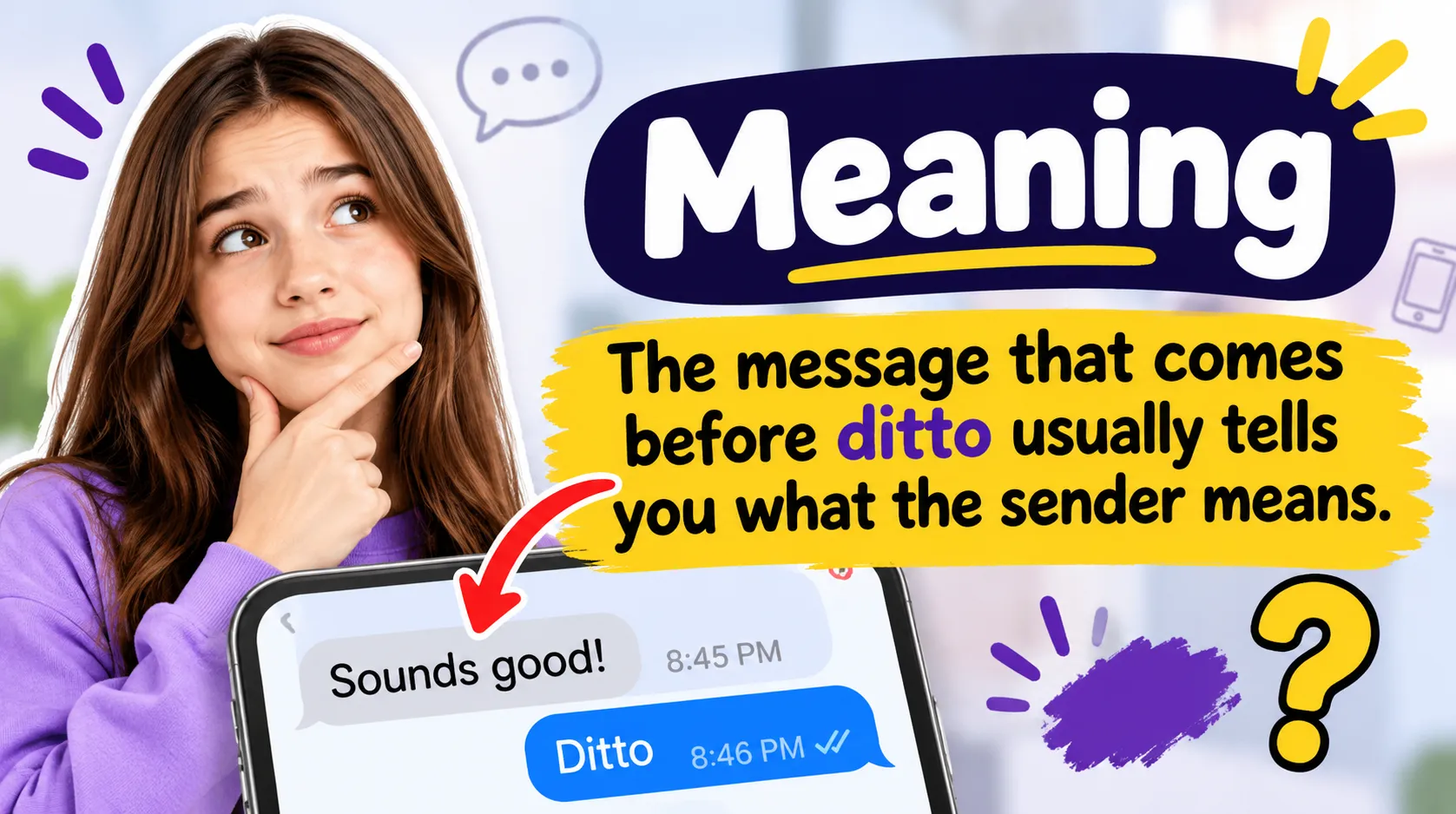
The message that comes before ditto usually tells you what the sender means.
The Most Common Meanings of “Ditto”
The word ditto has several common uses in everyday communication. Understanding these meanings will help you read messages more accurately.
1. Ditto Means “Me Too”
This is one of the most common meanings of ditto in texting.
When someone shares a feeling, experience, or personal preference, you can reply with ditto to say that you feel the same way.
Example:
Friend: I need a long vacation.
You: Ditto.
Your reply means that you also want a long vacation.
Here are more examples:
- “I love this song.” — “Ditto.”
- “I am hungry.” — “Ditto.”
- “I cannot wait for the weekend.” — “Ditto.”
In each example, the second person shares the same feeling or desire.
This use is common among friends, family members, and people who already understand each other’s communication style.
2. Ditto Means “Same Here”
Ditto can also mean “same here.” People use it when they want to show that they are in the same situation as another person.
For example:
Person A: I have so much homework tonight.
Person B: Ditto.
The second person also has a lot of homework.
Another example:
Person A: My internet is so slow today.
Person B: Ditto.
Both people are dealing with the same problem.
This meaning is useful when you want to show that someone is not alone in an experience. It can make a conversation feel more natural because you do not need to explain everything again.
3. Ditto Means “I Agree”
Sometimes ditto expresses agreement with another person’s opinion or statement.
For example:
Friend: We should leave early to avoid traffic.
You: Ditto.
In this case, you are agreeing with the suggestion.
Here is another example:
Person A: This restaurant has the best pizza.
Person B: Ditto.
The second person agrees with the opinion.
However, ditto does not always show strong agreement. It may simply mean that you share the same view.
If you want to make your agreement clearer, you can say, “Ditto, I completely agree.”
4. Ditto Means “I Feel the Same Way”
Ditto can express emotions, especially when people are discussing love, friendship, sadness, excitement, or personal feelings.
For example:
Person A: I am really happy we became friends.
Person B: Ditto.
The second person means they feel the same way.
Another example:
Person A: I miss talking to you.
Person B: Ditto.
Here, ditto means “I miss talking to you too.”
The emotional meaning depends on the original message and the relationship between the people.
If someone sends ditto after a loving message, it may feel warm and caring. If they send it after a casual statement, it may simply show that they agree.
5. Ditto Means “The Same Thing Again”
Outside casual texting, ditto can refer to something that is the same as what was mentioned before.
For example:
Person A: I will order a chocolate cake.
Person B: Ditto.
The second person may mean they want the same kind of cake.
In written lists or notes, ditto can also indicate that an earlier entry applies again. This use is less about sharing emotions and more about avoiding repetition.
In everyday messages, the meaning is usually clear from the surrounding words.
How “Ditto” Is Used in Real Conversations
People use ditto in different ways depending on the platform, the topic, and their relationship with the person they are talking to.
Friends & Casual Texting
Among friends, ditto is an easy way to agree or share a feeling.
Friends often send short messages because they already understand each other’s habits, jokes, and opinions.
Example 1:
Friend: I need coffee right now.
You: Ditto.
You are saying that you need coffee too.
Example 2:
Friend: Friday cannot come soon enough.
You: Ditto.
You also want Friday to arrive quickly.
Example 3:
Friend: That movie was amazing.
You: Ditto.
You agree that the movie was amazing.
In these conversations, ditto saves time and keeps the chat simple. It does not usually need a detailed explanation.
You can also add more words if you want to sound warmer.
For example, “Ditto! We should watch another movie together.”
Instagram & Snapchat
On Instagram and Snapchat, ditto may appear in direct messages, story replies, comments, or conversations about shared interests.
People may use it to agree with a post, react to a personal update, or express the same feeling.
Example 1: Instagram story
Person A’s story: I need a beach vacation.
Reply: Ditto!
The reply means that the person also wants a beach vacation.
Example 2: Direct message
Person A: This song has been stuck in my head all day.
Person B: Ditto.
Both people have the same song playing in their minds.
Example 3: Snapchat chat
Person A: I miss our old school days.
Person B: Ditto.
The second person also misses those memories.
The word is not limited to any one social media platform. Its meaning remains mostly the same wherever people use it.
Dating Apps
On dating apps, ditto can be friendly, affectionate, or slightly flirty. The meaning depends on the message that comes before it.
For example:
Person A: I love people who can make me laugh.
Person B: Ditto.
The second person shares that preference.
Another example:
Person A: I had a really good time talking to you.
Person B: Ditto.
This reply means that the other person enjoyed the conversation too.
Ditto can also appear in a more romantic exchange.
Person A: I wish you were here right now.
Person B: Ditto.
The reply suggests that the second person shares the same wish.
However, do not assume that ditto always signals romantic interest. Someone may simply be agreeing with you or being polite.
Look at the full conversation, the person’s other messages, and how they normally communicate before deciding whether the reply is flirty.
Gaming & Online Communities
Gamers and online community members often use short replies to communicate quickly.
Ditto can show that another person has the same opinion, preference, or experience.
Example 1:
Player A: This level is so difficult.
Player B: Ditto.
Both players are struggling with the level.
Example 2:
Player A: We need a better team strategy.
Player B: Ditto.
The second player agrees.
Example 3:
Member A: This update made the game much better.
Member B: Ditto.
The second member shares the same opinion.
Ditto is not exclusive gaming slang. It is an ordinary English word that people also use in gaming chats, group discussions, and online forums.
Work or Professional Chat
Ditto can appear in workplace messages when colleagues agree with a point or share the same preference.
For example:
Colleague A: I think we should review the report before sending it.
Colleague B: Ditto.
The second colleague agrees with the suggestion.
Another example:
Team member A: We need more time to finish this task.
Team member B: Ditto.
The second team member also needs more time.
Although ditto is a real English word, it may sound too casual in some professional situations. A full sentence is often better when discussing important decisions, deadlines, or responsibilities.
Instead of replying with only “Ditto,” you could write, “I agree. We need more time to complete the task.”
This makes your meaning clear and sounds professional.
Is “Ditto” Rude, Flirty, or Offensive?
Ditto is generally a neutral and friendly word. It is not normally rude or offensive. However, its tone can change depending on the conversation, the relationship, and the way someone uses it.
Is Ditto Rude?
Usually, no.
If someone tells you something and you reply with ditto, you are normally saying that you feel the same way.
For example:
Friend: I am exhausted after work.
You: Ditto.
This is a normal, casual response.
However, ditto might seem dismissive if someone is sharing a serious problem and you reply with only one word.
For example:
Friend: I have had a really difficult week, and I feel overwhelmed.
You: Ditto.
Your friend may feel that you are not paying attention to their problem.
In this situation, a more caring response would be, “I’m sorry you are having such a hard week. I understand how that feels.”
The word itself is not rude. The problem is that a short response may not provide the support the other person needs.
Is Ditto Flirty?
Ditto can sound flirty when it responds to a romantic or affectionate message.
For example:
Person A: I like talking to you.
Person B: Ditto.
The second person is saying that they also enjoy talking to the first person.
Another example:
Person A: I wish we could spend more time together.
Person B: Ditto.
This may suggest shared interest or affection.
Still, ditto alone does not prove that someone has romantic feelings. It can express agreement without any romantic meaning.
Pay attention to the full conversation rather than judging the relationship from one word.
Is Ditto Offensive?
Ditto is not normally offensive. It is a common English word used to express sameness or agreement.
It could sound sarcastic in certain conversations, especially if someone uses it to mock another person’s opinion.
For example:
Person A: I am always right.
Person B: Ditto.
Depending on the tone, the second person might be making a joke rather than sincerely agreeing.
In text messages, sarcasm can be difficult to recognize because you cannot hear the person’s voice. If the meaning is unclear, look at the previous messages or ask what they meant.
Why Context Matters
The same word can communicate different feelings in different situations.
A reply of ditto after “I love this song” is probably casual agreement. A reply after “I miss you” may feel affectionate. A reply after a serious personal problem may seem too brief.
The best way to understand ditto is to read the message that came before it. That message usually reveals what the sender is agreeing with or repeating.
How to Respond When Someone Says “Ditto”
Your response depends on what the person is agreeing with. You do not always need to reply with another long message.
Here are some natural ways to respond.
Casual Replies
Use these replies when chatting with friends or people you know well.
- “Same here!”
- “Me too!”
- “I knew you would agree.”
- “Exactly!”
- “Glad we agree.”
- “Right?!”
- “We are on the same page.”
Example:
You: I cannot wait for the weekend.
Friend: Ditto.
You: Same here! I need a break.
These replies keep the conversation relaxed and friendly.
Funny Replies
If you are joking with a friend, you can make your response playful.
- “Great minds think alike.”
- “We share one brain.”
- “Copy-paste feelings.”
- “Twins!”
- “Finally, someone understands me.”
- “We are officially on the same team.”
Example:
You: I could eat pizza every day.
Friend: Ditto.
You: We clearly have excellent taste.
Funny replies work best when the conversation is already lighthearted. Avoid joking if the other person is discussing something serious.
Neutral Replies
If you want to keep the conversation simple, try these responses.
- “I see.”
- “Good to know.”
- “Fair enough.”
- “That makes sense.”
- “Glad you feel the same.”
- “I thought so.”
For example:
You: This weather is perfect for a walk.
Friend: Ditto.
You: We should go for one later.
A neutral reply is useful when you want to acknowledge the person’s message and continue the conversation.
Professional Replies
In work conversations, choose a reply that makes your agreement clear.
You can say:
- “I agree.”
- “I feel the same way.”
- “That is my view as well.”
- “I have the same concern.”
- “I agree with that suggestion.”
- “We are aligned on this point.”
For example:
Colleague: We should check the figures before submitting the report.
You: I agree. Let’s review them together.
This reply is clearer and more useful than simply repeating ditto.
What If You Do Not Understand the Reply?
If you are unsure what the person means, ask a simple question.
For example:
- “Do you mean you feel the same way?”
- “Same as what I said?”
- “Are you agreeing with me?”
There is no need to feel embarrassed about asking. A short clarification can prevent confusion.
Common Misunderstandings About “Ditto”
Although ditto is easy to understand, people sometimes misread it in text messages.
1. Thinking Ditto Always Means Romantic Interest
If someone says ditto after you write “I miss you,” the reply means they miss you too.
However, it does not automatically mean that they are in love with you or want a relationship.
The word expresses a matching feeling. The nature of that feeling depends on the original message and the relationship.
2. Thinking Ditto Means Strong Agreement
Ditto usually shows agreement or sameness, but it does not always express a strong opinion.
For example:
Person A: This restaurant is okay.
Person B: Ditto.
The second person means they also think the restaurant is okay. They are not necessarily saying it is the best restaurant they have ever visited.
3. Thinking Ditto Is Internet Slang Only
Ditto is not a word created only for social media. It is an established English word that people also use in everyday speech and writing.
Its use in texting is simply a convenient way to avoid repeating the same words.
4. Confusing Ditto With “Ditto Again”
Sometimes people use ditto to mean that something is the same as before. They may also use it when ordering the same item as someone else.
For example:
Person A: I will have tea without sugar.
Person B: Ditto.
The second person wants the same drink.
The meaning is similar, but the situation is different from sharing an emotion or agreeing with an opinion.
5. Assuming a Short Reply Means Someone Is Angry
A person who replies with ditto may simply prefer short messages.
They might be busy, relaxed, or comfortable with the conversation.
Do not assume they are angry just because they did not write a complete sentence. Look at their usual texting style and the surrounding messages.
6. Ignoring the Original Message
The biggest mistake is trying to understand ditto without reading the message that came before it.
For example, ditto can mean “I am tired too,” “I agree,” or “I miss you too.”
The word refers back to something already mentioned. Without that information, its exact meaning may be unclear.
Similar Slang Terms You Should Know
If you understand ditto, these related words and expressions will also help you understand everyday texting.
- Me too: A direct way to say that you share someone’s feeling, experience, or opinion.
- Same here: Means that you are in the same situation or feel the same way.
- Same: A short, casual reply used to show agreement or shared feelings.
- IKR: Short for “I know, right?” and used to show strong agreement with someone.
- FR: Short for “for real,” often used to show that you agree or think something is true.
- Facts: A casual way to agree with a statement or say that it is true.
- Agreed: A clear way to show that you accept or support someone’s opinion or suggestion.
- Exactly: Used when you strongly agree with what another person has said.
- Likewise: Means “the same to you” or “I feel the same way,” often in polite conversations.
- Ditto that: An informal expression that means you agree with or share the previous statement.
- Same vibe: Used when two people share a similar mood, attitude, taste, or feeling.
- Me neither: Used to agree with a negative statement, such as “I don’t like waiting.”
These terms are related, but they are not always interchangeable.
For example, “me neither” usually responds to a negative statement, while ditto can refer to both positive and negative statements.
Likewise, “IKR” often shows strong agreement, while ditto simply indicates that the same thought or feeling applies.
Choose the expression that fits your message and the person you are talking to.
When You Should Avoid Using “Ditto”
Ditto is useful in everyday conversations, but it may not be the best choice in every situation.
Professional Settings
In a casual team chat, ditto may be perfectly acceptable. However, it can sound vague in formal emails, reports, or important workplace discussions.
For example, if your manager asks whether you agree with a project plan, replying with only “Ditto” may not explain your position clearly.
A better response would be:
“I agree with the proposed plan and support moving forward.”
This makes your meaning clear and sounds more professional.
Cross-Cultural Chats
Not everyone has the same level of English knowledge. Some people may not know what ditto means, especially if English is not their first language.
If you are talking to someone who may not understand the word, use a simpler expression such as “me too” or “I agree.”
For example, instead of saying “Ditto,” you could write, “I feel the same way.”
Clear language helps prevent confusion and makes conversations easier for everyone.
Sensitive Situations
Be careful when using ditto in conversations about grief, illness, stress, or personal problems.
A short response may make the other person feel that you are ignoring their emotions.
For example:
Friend: I am really worried about my family.
You: Ditto.
This reply may be unclear. Are you worried about your own family, or are you saying that you understand your friend’s feelings?
A more thoughtful response would be:
“I’m sorry you are dealing with that. I hope things get better soon.”
If you are facing the same problem, you can explain that gently.
For example, “I understand. I’m dealing with something similar, too.”
When a Clear Answer Is Needed
Avoid using ditto when someone needs a specific answer.
If a person asks whether you can attend a meeting, replying with ditto may not make sense unless you are clearly referring to another person’s answer.
Instead, say, “Yes, I can attend,” or “No, I will not be available.”
Use ditto when the meaning is already clear. Use a full sentence when clarity matters more than brevity.
FAQs
1. What does ditto mean in text messages?
Ditto means “me too,” “same here,” or “I feel the same way.” It is used to agree with someone or express the same feeling without repeating their words.
2. What does ditto mean from a girl?
When a girl texts ditto, she usually means that she agrees with you or shares the feeling you expressed. It may be friendly or affectionate, but it does not automatically mean she likes you romantically.
3. What does ditto mean from a guy?
When a guy sends ditto, he is usually saying “same here” or “me too.” The exact meaning depends on your conversation and what he is responding to.
4. Is ditto a positive or negative word?
Ditto is generally neutral. It can express positive feelings, agreement, or shared frustration. The original message and the situation determine whether it sounds warm, casual, or dismissive.
5. Is ditto the same as me too?
Yes, in many everyday conversations. Both expressions show that you share another person’s feeling or experience. Ditto can also mean that something is the same as a previously mentioned item or statement.
6. How do you reply to ditto in a text?
You can reply with “same here,” “me too,” “exactly,” or “glad we agree.” If the conversation is romantic, you can respond warmly. In professional chats, “I agree” is often clearer.
7. Is ditto formal or informal?
Ditto is an established English word, but using it as a one-word reply is usually casual. It can work in informal workplace chats, while complete sentences are often better for formal emails and important discussions.
Final Thoughts
The ditto meaning in text is simple: it usually means “me too,” “same here,” or “I feel the same way.” People use it to show agreement, share emotions, and avoid repeating a full sentence.
You may see ditto in messages between friends, on social media, in dating conversations, or in online communities. It can express anything from a shared opinion to an affectionate feeling.
However, the word does not always carry the same emotional meaning. A reply of ditto after a joke may be casual, while a reply after “I miss you” may feel more personal. The message that comes before it is the best clue.
When you use ditto, think about your audience and the situation. It works well when both people understand the conversation. If someone needs a clear answer or emotional support, a complete sentence may be more helpful.
Now that you know what ditto means, you can recognize it in everyday conversations and use it naturally when you want to say, “I feel the same way.”

Ethan Parker is a creative content writer passionate about pets, animals, and unique name ideas. He loves creating fun and engaging content that helps readers discover the perfect names with ease.