
Have you ever received a text saying “WTM tonight?” or “Hey, WTM?” and wondered what the person was asking? You are not alone. Many people see this short form on Snapchat, Instagram, TikTok, and in everyday text messages but are unsure what it means.
The good news is that understanding WTM is usually simple. In casual texting, WTM most commonly means “What’s the move?” People use it to ask about plans, find out what others are doing, or see if anyone wants to hang out.
In some conversations, it can also mean “What’s the matter?” or “What’s the mood?” depending on the situation.
Knowing the meaning can help you understand the message and reply without feeling confused. However, the exact meaning depends on the words around it, your relationship with the sender, and the topic of the conversation.
In this guide, you will learn what WTM means in text, how people use it on social media, whether it sounds flirty or rude, and how to respond naturally. You will also discover similar slang terms and common mistakes to avoid.
By the end, you will know how to understand WTM in different conversations and use it with confidence.
What Does “WTM” Mean in Text?
WTM most commonly means “What’s the move?” in casual texting. It is a short way to ask about plans, activities, or what people want to do next. Depending on the conversation, WTM can also mean “What’s the matter?” or “What’s the mood?” The surrounding message usually makes the intended meaning clear.
For example, if a friend texts “WTM tonight?”, they are probably asking about your plans for the evening.
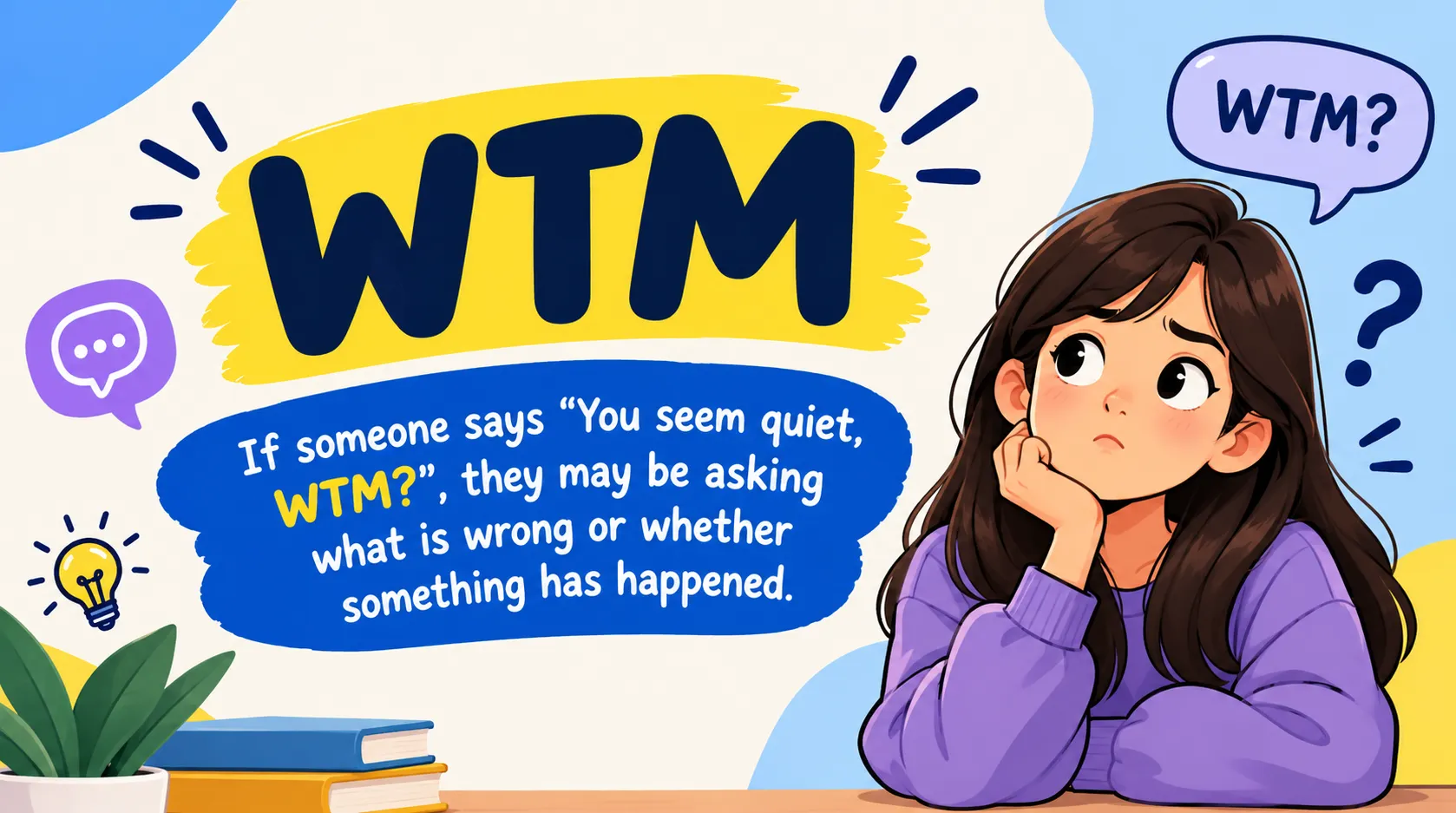
If someone says “You seem quiet, WTM?”, they may be asking what is wrong or whether something has happened.
Here are three common interpretations:
- What’s the move? Asking about plans or activities.
- What’s the matter? Asking whether something is wrong.
- What’s the mood? Asking about the vibe, feelings, or atmosphere.
These meanings are not equally common in every setting. “What’s the move?” is especially useful when people are making plans or deciding what to do together.
Always read the full message before choosing a meaning.
The Most Common Meanings of “WTM”
WTM can have different meanings based on the conversation. Understanding the main interpretations will help you avoid confusion and respond in the right way.
1. WTM Means “What’s the Move?”
This is one of the most common meanings of WTM in modern texting.
People use “What’s the move?” when they want to know the plan. They may be asking where everyone is going, what the group wants to do, or whether something interesting is happening.
The phrase is casual and friendly. It is common among friends, classmates, and people who enjoy making plans through text messages.
Examples:
Friend: WTM tonight?
You: We could grab some food and watch a movie.
Here, your friend wants to know what you plan to do that evening.
Another example:
Friend: Everyone is free tomorrow. WTM?
You: Let’s go to the mall.
In this conversation, WTM means the sender wants someone to suggest an activity.
You may also see messages such as:
- “WTM this weekend?”
- “WTM after class?”
- “WTM for New Year’s?”
- “WTM later?”
In each case, the sender is trying to start a conversation about plans.
2. WTM Means “What’s the Matter?”
WTM can also stand for “What’s the matter?” when someone thinks another person may be upset, worried, or dealing with a problem.
This meaning depends heavily on the context. It is more likely when the conversation is about feelings, an argument, or a change in someone’s behavior.
Example:
Friend: I don’t feel like talking today.
You: Hey, WTM? Are you okay?
Here, you are asking whether something is wrong.
Another example:
Person: You have been quiet all day.
You: Nothing much.
Person: WTM? You seem different.
The sender wants to understand why you seem unhappy or quiet.
However, not everyone uses WTM this way. Some people may write “What’s wrong?” or “What’s the matter?” in full because those expressions are clearer.
If the conversation is about someone’s feelings rather than plans, this interpretation may fit better.
3. WTM Means “What’s the Mood?”
Another possible interpretation is “What’s the mood?”
In this case, the sender wants to know the atmosphere, feelings, or general vibe of a situation.
It may come up when friends are deciding what kind of activity they want, discussing music, or choosing between a relaxed evening and a lively outing.
Examples:
Friend: WTM for tonight?
You: Chill music and a movie.
The conversation is about the kind of evening everyone wants.
Another example:
Friend: WTM for the party?
You: Good music and a fun crowd.
Here, the sender is asking about the desired atmosphere.
This meaning is more dependent on the people involved and their texting habits. Do not assume every WTM message means “What’s the mood.”
4. WTM Can Have Other Meanings in Specific Communities
Abbreviations can have special meanings in certain online groups, games, or personal conversations.
A person may use WTM in a way that their friends understand but that other people do not recognize. In a work discussion, for example, the sender might use it as an internal abbreviation rather than general internet slang.
There is no single alternative meaning that fits every situation.
Example:
Teammate: WTM for the next round?
You: Do you mean the plan for our next round?
The best response is to ask for clarification if the meaning is unclear.
Remember that common texting meanings are helpful starting points, not strict rules. The conversation itself provides the strongest clue.
How “WTM” Is Used in Real Conversations
WTM appears in many types of digital communication. Its meaning can change depending on the platform, the relationship between the people, and the subject of the conversation.
Friends & Casual Texting
Friends often use WTM to make plans quickly.
Instead of typing a full sentence, someone can send three letters to ask what everyone wants to do.
Example 1:
Alex: WTM after school?
Sam: Let’s get something to eat.
Example 2:
Alex: I’m bored. WTM?
Sam: Come over and let’s play games.
Example 3:
Alex: WTM this weekend?
Sam: Maybe a movie on Saturday.
In these examples, WTM means “What’s the move?”
It can also help restart a quiet group chat. Someone may send “WTM?” when they want people to suggest plans.
The expression does not require a long answer. A place, activity, or time is often enough.
Instagram & Snapchat
On Instagram and Snapchat, people often use short expressions because they want to keep conversations quick.
WTM may appear in direct messages, replies to stories, or group chats.
For example, someone might post that they are bored. A friend could reply:
“WTM?”
They are likely asking whether the person wants to do something.
Another example:
You: Anyone free tonight?
Friend: WTM?
You: Let’s get coffee.
WTM may also appear after someone shares a photo from a restaurant, concert, or social event. The sender could be asking about the plans or inviting others to join.
However, the abbreviation does not automatically mean that someone wants to meet you. Look at the full conversation before assuming an invitation or special interest.
Dating Apps
WTM can appear on dating apps when someone wants to start a casual conversation or suggest meeting up.
For example:
Person A: Hey, what are you doing this weekend?
Person B: Nothing planned yet.
Person A: WTM Saturday?
Person B: We could get coffee.
Here, WTM likely means “What’s the move?” The person is trying to find out whether you have plans or want to arrange a date.
It can sound relaxed because the sender is not making a formal invitation.
However, WTM is not automatically flirty. Friends use it too, and some people use short messages with everyone.
To understand the tone, consider other signs:
- Does the person ask personal questions?
- Have they shown interest in meeting you?
- Do they suggest spending time together?
- Is the conversation already romantic?
These details matter more than the abbreviation alone.
If you are unsure whether the sender is asking you out, you can respond naturally:
“Are you asking me to make plans with you?”
This keeps the conversation clear without making assumptions.
Gaming & Online Communities
WTM can also appear in gaming chats and online communities when players need to decide what to do next.
The intended meaning may be “What’s the move?” when a team is planning its next action.
Example:
Player 1: We finished this mission. WTM?
Player 2: Let’s start the next one.
Another example:
Player 1: Everyone is online now.
Player 2: WTM?
Player 3: Let’s play ranked matches.
In these situations, WTM helps players make quick decisions.
Still, online groups may have their own slang. If a gaming community uses WTM differently, the group’s usual language may explain it.
When playing with people you do not know well, use clear wording if the next action needs to be understood by everyone.
Work or Professional Chat
WTM is generally too informal for many professional conversations, especially when communicating with a manager, customer, or new business contact.
A close team may use it in a casual group chat, but it can confuse people who do not know the abbreviation.
For example:
Coworker: WTM for the meeting?
The sender may be asking about the plan or next step, but the message does not clearly explain what they need.
A clearer version would be:
“What is the plan for the meeting?”
Or:
“What should we do next?”
If you receive WTM at work and do not understand it, ask the sender to explain.
Clear language is especially important when discussing deadlines, tasks, meetings, or important decisions.
Is “WTM” Rude, Flirty, or Offensive?
WTM is usually not rude or offensive. In most casual conversations, it is simply a short way to ask about plans or find out what is happening.
However, its tone can change depending on the situation.
When WTM Sounds Friendly
WTM often sounds friendly when friends are making plans or checking whether someone wants to hang out.
Example:
“WTM tonight? We should do something fun.”
The sender is inviting others to suggest an activity.
The message is short, but it does not suggest anger or disrespect.
When WTM Sounds Flirty
WTM may sound flirty when someone uses it to start a conversation with a person they like or suggest spending time together.
Example:
“WTM this weekend? We should finally meet.”
The message could be a casual invitation to a date.
Still, WTM itself is not a romantic expression. The surrounding words and the relationship between the people provide the real clues.
When WTM Sounds Annoyed
WTM can sound impatient if someone expects an answer or believes the other person is hiding a problem.
Example:
“You’ve been acting strange all day. WTM?”
Depending on the situation, this may sound concerned, confused, or slightly annoyed.
The abbreviation does not create that tone on its own. The subject and wording affect how the message feels.
Is WTM Offensive?
WTM is not generally considered offensive slang. It does not normally contain an insult or swear word.
However, a short message can sometimes feel blunt, especially when someone expects a more thoughtful response.
If you are worried about the tone, look at the whole message instead of judging the three letters alone.
How to Respond When Someone Says “WTM”
The best reply depends on what the sender means. If they are asking about plans, suggest an activity. If they seem concerned about you, explain how you feel.
Here are some natural responses.
Casual Replies
Use these replies when a friend asks what the plan is.
- “Let’s grab some food.”
- “I’m free tonight. What do you have in mind?”
- “We could watch a movie.”
- “Nothing planned yet. Any ideas?”
- “Let’s hang out later.”
- “I’m down for anything.”
Example:
Friend: WTM tonight?
You: Let’s get pizza and watch a movie.
These answers keep the conversation simple and friendly.
Funny Replies
If you are chatting with a close friend, a playful answer can make the conversation more fun.
- “The move is straight to the fridge.”
- “First, we need a million-dollar plan.”
- “Sleep is the move.”
- “Whatever gets us free food.”
- “Survive the day, then decide.”
Example:
Friend: WTM this weekend?
You: The move is to become rich without leaving the house.
A funny reply works best when you already know the other person’s sense of humor.
Neutral Replies
If you are unsure what the person wants, use a neutral response.
- “What do you have in mind?”
- “I’m not sure yet.”
- “Can you explain what you mean?”
- “Are you asking about tonight’s plans?”
- “Nothing planned so far.”
Example:
Person: WTM?
You: Do you mean what’s the plan?
This is useful when the abbreviation could have more than one meaning.
Professional Replies
In a work-related conversation, answer clearly and politely.
- “Could you clarify what you mean?”
- “The plan is to finish the report today.”
- “Let’s review the next steps.”
- “I suggest we discuss the options first.”
- “Please let me know which task you mean.”
Example:
Coworker: WTM for the project?
You: The next step is to review the draft and send feedback by Friday.
A clear answer reduces confusion and helps everyone understand what needs to happen.
What If Someone Means “What’s the Matter?”
If the conversation is about your feelings, the sender may be asking whether something is wrong.
You could reply:
- “Nothing serious. I’m just tired.”
- “I’m okay, thanks for asking.”
- “I’ve had a rough day.”
- “Can we talk about it later?”
- “I’m upset about something, but I’ll explain.”
You do not have to share personal details if you are not comfortable doing so.
Common Misunderstandings About “WTM”
Although WTM is short, people can misunderstand it when they do not consider the context.
1. Assuming WTM Always Means “What’s the Move?”
This is the most common mistake.
Although “What’s the move?” is a common interpretation, WTM can also be used to ask “What’s the matter?” or “What’s the mood?”
For example, if someone notices that you are upset, the sender may not be asking about weekend plans.
Read the surrounding messages before deciding what the person means.
2. Thinking WTM Is Always an Invitation
If someone texts “WTM tonight?”, they may be interested in making plans with you.
However, it does not guarantee that they are inviting you to a specific place or asking you on a date.
They may simply want suggestions for a group activity.
A simple response such as “What did you have in mind?” can help you understand their intentions.
3. Confusing WTM With Other Abbreviations
WTM is sometimes confused with similar short forms, such as WYA, WYD, and WBU.
These abbreviations have different meanings:
- WYA: Where you at?
- WYD: What are you doing?
- WBU: What about you?
- WTM: Commonly, what’s the move?
They may appear in the same conversation, but they do not ask exactly the same question.
4. Thinking Short Messages Are Always Rude
Some people prefer short messages because they type quickly or use slang with friends.
A message such as “WTM?” may look blunt, but it is not necessarily rude.
Consider the sender’s usual texting style and the situation before deciding that they are being unfriendly.
5. Assuming WTM Has One Meaning Everywhere
Slang changes across groups, platforms, and regions.
A meaning that is common among one group of friends may be unfamiliar to another group.
If you cannot work out the intended meaning, asking a quick question is better than making the wrong assumption.
Similar Slang Terms You Should Know
If you often see internet slang, learning a few related abbreviations can make texting easier.
Here are 10 common terms that are useful to know.
- WYD — What You Doing? Used to ask what someone is doing right now.
- WYA — Where You At? Used to ask about someone’s location.
- WBU — What About You? Used to return a question to another person.
- HMU — Hit Me Up. Means contact me or send me a message.
- LMK — Let Me Know. Used when someone wants you to share information later.
- HBU — How About You? Used to ask another person the same question.
- WYO — What You On? Can ask what someone is doing or what they have planned, depending on context.
- BRB — Be Right Back. Tells someone that you will return shortly.
- IDK — I Don’t Know. A quick way to say you do not have an answer.
- TBH — To Be Honest. Often used before sharing an honest opinion.
These terms are common in casual messages, social media conversations, and online chats. Their exact tone can still depend on the situation.
For example, someone might text “WYD?” to ask what you are doing and follow it with “WTM tonight?” to ask about your plans.
Learning these expressions helps you understand the conversation without needing to search for every abbreviation.
When You Should Avoid Using “WTM”
WTM is useful in casual conversations, but it is not the best choice in every situation.
Knowing when to use full words can help you communicate more clearly.
Professional Settings
Avoid WTM in formal emails, job applications, customer messages, and important business discussions.
Not everyone knows the same slang, and an unclear abbreviation can lead to mistakes.
Instead of writing:
“WTM for the meeting?”
Write:
“What is the plan for the meeting?”
The full question is easier to understand and sounds more professional.
Cross-Cultural Chats
People from different countries and language backgrounds may not recognize WTM.
Even fluent English speakers may be unfamiliar with certain texting abbreviations.
If you are talking to someone you do not know well, use simple, complete sentences.
For example, instead of “WTM this weekend?”, you could write:
“Do you have any plans for this weekend?”
This makes your message clear without requiring the other person to know internet slang.
Sensitive Situations
If someone is upset, worried, or dealing with a serious problem, an abbreviation may not communicate your concern clearly.
For example, if a friend tells you they are having a difficult day, replying with “WTM?” may leave them unsure whether you are asking about their feelings or their plans.
A clearer response would be:
“What’s wrong? Do you want to talk about it?”
This shows that you are paying attention and gives the other person room to explain.
Important Invitations and Plans
WTM can work well among close friends, but it may be too vague when details matter.
If you are organizing a meeting, trip, or event, include the date, time, and activity.
For example:
“Are you free at 6 PM on Saturday? We could meet for dinner.”
Clear details make it easier for everyone to respond.
FAQs
What does WTM mean in text messages?
WTM most commonly means “What’s the move?” in casual texting. People use it to ask about plans or what others want to do. In some conversations, it can also mean “What’s the matter?” or “What’s the mood?”
What does WTM mean on Snapchat?
On Snapchat, WTM often means “What’s the move?” Someone may use it in a chat or reply to a story to ask about plans or suggest doing something together. The exact meaning depends on the conversation.
What does WTM mean from a girl?
When a girl texts WTM, she may be asking about your plans or suggesting that you make plans together. It does not automatically mean she likes you romantically. Her other messages and the situation provide better clues.
What does WTM mean from a guy?
When a guy sends WTM, he is often asking what the plan is or what you want to do. He may be starting a casual conversation, arranging an activity, or checking whether you are available.
Does WTM mean “What’s the matter”?
Yes, WTM can mean “What’s the matter?” when someone is asking whether something is wrong. However, “What’s the move?” is another common interpretation, especially when people are discussing plans.
Is WTM flirty?
WTM can sound flirty if someone uses it to suggest meeting up or spending time together. However, it is not naturally romantic. Friends and other acquaintances also use it when making plans.
How should I reply to WTM?
If someone is asking about plans, you can suggest an activity or ask what they have in mind. For example, reply with “Let’s grab some food” or “Nothing planned yet. What about you?” If the meaning is unclear, ask the sender to explain.
Final Thoughts
WTM is a useful abbreviation to understand if you often text friends or use social media. Its most common meaning is “What’s the move?”, a casual way to ask about plans, activities, or what people want to do next.
However, the meaning can change with the conversation. Someone may use WTM to ask “What’s the matter?” or “What’s the mood?” instead.
The easiest way to understand the abbreviation is to look at the messages around it. If people are talking about weekend plans, WTM probably refers to an activity. If the conversation is about someone’s feelings, the sender may be asking whether something is wrong.
You can reply with a suggestion, ask a question, or request clarification if you are unsure.
Remember that WTM is generally informal, so it works best with friends and people who understand texting slang. For professional messages or sensitive conversations, using full words is often the better choice.
Once you understand the context, responding to WTM becomes simple. You can follow the conversation naturally without worrying too much about the abbreviation.

Ethan Parker is a creative content writer passionate about pets, animals, and unique name ideas. He loves creating fun and engaging content that helps readers discover the perfect names with ease.