
Have you ever received a text that says “WBU?” and wondered what the other person was asking? You may see this short form in a chat with a friend, on Snapchat, in an Instagram message, or while talking to someone new online.
If you do not know the meaning, it can be hard to understand what to say next.
The good news is that WBU is one of the easiest texting abbreviations to learn. People use it to keep conversations short, quick, and natural. It often appears after someone shares news about their day, answers a question, or talks about their feelings.
When people search for “what does WBU mean in text,” they usually want to understand the abbreviation and learn how to reply correctly. They may also wonder whether it sounds friendly, flirty, rude, or casual.
In this guide, you will learn the main meaning of WBU, how people use it in different conversations, and what to say when someone sends it to you. You will also discover similar texting terms, common mistakes, and examples that make everything easy to understand.
What Does “WBU” Mean in Text?
WBU stands for “What About You?” It is a common texting abbreviation used to ask another person the same question or learn about their thoughts, feelings, plans, or experiences. People often use WBU in casual chats, social media messages, and online conversations to keep a discussion going without typing the full phrase.
For example, if someone says, “I’m doing great, WBU?” they are asking how you are doing. Depending on the conversation, WBU can also ask about your plans, opinions, interests, or current situation.
The abbreviation is popular because it saves time and makes texting feel more relaxed. It is not usually rude or offensive. Its meaning is generally clear when you read the message before it.
The Most Common Meanings of “WBU”
WBU usually has one main meaning: “What About You?” However, the information someone wants from you depends on the topic of the conversation.
1. WBU Means “What About You?”
This is the standard meaning of WBU in texting. Someone uses it to return a question or invite you to share your own answer.
Example:
Person A: How are you today?
Person B: I’m good, WBU?
Person A: I’m doing well too.
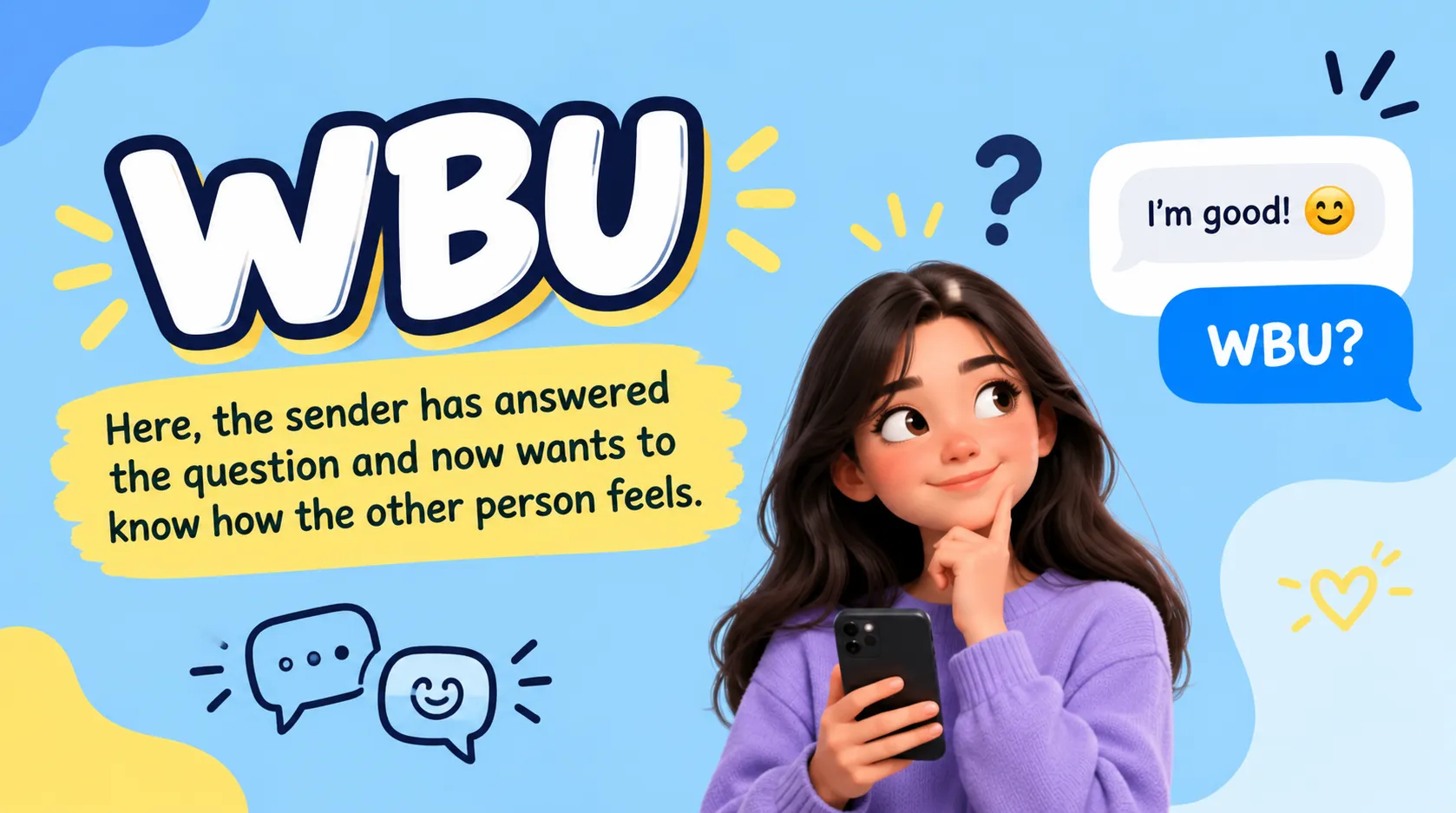
Here, the sender has answered the question and now wants to know how the other person feels.
You can use WBU after talking about your mood, health, day, or general well-being. It shows that you are interested in the other person’s answer.
2. WBU Asks About Your Plans
People also use WBU when they want to know what you plan to do.
Example:
Person A: I’m going to the mall this evening. WBU?
Person B: I might stay home and watch a movie.
In this example, WBU means “What about you?” The sender wants to know your plans for the evening.
You may see this use when friends discuss weekend activities, holidays, parties, trips, or other events.
3. WBU Asks for Your Opinion
WBU can also invite someone to share an opinion. It is common when people discuss movies, music, food, games, or other interests.
Example:
Person A: I think this movie is amazing. WBU?
Person B: I like it too, but the ending was confusing.
The sender is asking what you think about the movie.
This use helps both people share their views without making the conversation feel formal.
4. WBU Keeps a Conversation Going
Sometimes, people use WBU simply because they want to keep chatting. They may have answered your question and want to give you a chance to speak.
Example:
Person A: What music do you like?
Person B: Mostly pop music. WBU?
Person A: I listen to hip-hop and rock.
WBU makes the conversation feel balanced. Instead of only talking about themselves, people use it to show interest in the other person.
How “WBU” Is Used in Real Conversations
WBU appears in many types of digital communication. Its meaning usually stays the same, but the tone can change depending on who sends it and what you are discussing.
Friends & Casual Texting
Friends often use WBU when talking about their daily lives. It is a quick way to ask the same question without repeating a full sentence.
Examples:
- “I’m going out with my cousins, WBU?”
- “My day was pretty good. WBU?”
- “I love pizza. WBU?”
- “I’m free this weekend. WBU?”
In these messages, WBU sounds friendly and relaxed. It helps people exchange information and keep a conversation moving.
You can also use it when catching up with an old friend. For example, if your friend says they have started a new hobby, you can reply with your own experience and ask, “WBU?”
There is no need to add the abbreviation to every message. Use it when you genuinely want to know something about the other person.
Instagram & Snapchat
On Instagram and Snapchat, WBU is often used in direct messages, story replies, and casual chats.
For example, someone might post a question about favorite songs. You reply with your choice, and they ask, “WBU?” to learn what you enjoy.
Example:
Person A: What’s your favorite place to visit?
Person B: I love the beach. WBU?
Person A: I prefer the mountains.
The abbreviation also appears when people discuss plans, hobbies, school, or everyday activities.
On these platforms, WBU usually has a casual tone. However, the exact meaning still depends on the previous messages.
If someone sends only “WBU?” after you answer a question, they probably want you to share your own answer. You do not need to search for a hidden meaning unless the conversation gives you a reason to think there is one.
Dating Apps
WBU is also common on dating apps because people often ask questions to learn about each other.
A person might ask about your favorite food, hobbies, weekend plans, or ideal date. After answering, they may use WBU to invite you to share your own preferences.
Example:
Person A: I enjoy quiet dinners and long walks. WBU?
Person B: I like trying new restaurants and exploring new places.
Here, WBU keeps the conversation balanced and helps both people learn more about each other.
Can WBU be flirty on a dating app? Yes, it can be part of a flirty conversation, but the abbreviation itself is not a romantic expression.
For example:
Person A: I like spending time with someone who makes me laugh. WBU?
Person B: Same here. Bonus points if they have a cute smile.
The playful tone comes from the words around WBU, not from the abbreviation alone.
If someone keeps asking questions and showing interest in your answers, they may want to get to know you better. Still, one WBU message is not enough to prove romantic interest.
Gaming & Online Communities
Gamers and online community members use WBU when discussing games, team plans, preferences, or experiences.
Examples:
- “I’m playing ranked matches tonight. WBU?”
- “I prefer action games. WBU?”
- “I’m joining the tournament tomorrow. WBU?”
- “That was my favorite game. WBU?”
In gaming chats, short messages help players communicate quickly. WBU is useful when a player wants to ask about someone else’s plans or preferences.
For example, if your teammate says they are ready for another match, you can reply, “Same here, WBU?” However, this may sound repetitive if the context already makes your meaning clear.
WBU can also appear in gaming forums, Discord servers, and group chats. Its meaning generally remains “What About You?”
Work or Professional Chat
WBU is less suitable for formal workplace communication. It may be fine in a friendly team chat, especially when coworkers already use casual language.
Example:
Coworker A: I’m available for the meeting at 3 PM. WBU?
Coworker B: I can join at that time too.
The message is understandable, but a more professional version would be:
“I’m available for the meeting at 3 PM. Are you available too?”
In a formal email, business proposal, or message to a new client, writing the complete question is usually better.
The main point is to consider your audience. WBU is not automatically unprofessional, but its short and informal style may not fit every workplace.
Is “WBU” Rude, Flirty, or Offensive?
WBU is generally neutral and friendly. It is a common abbreviation for “What About You?” and does not usually contain a rude, offensive, or romantic meaning.
Still, the tone can change depending on the situation.
Is WBU Rude?
No, WBU is not normally rude. People often use it to show interest and give another person a chance to answer.
For example:
“I’m feeling much better today. WBU?”
This sounds friendly because the sender is asking about your well-being.
However, a very short reply can sometimes feel cold if the conversation is serious. For example, if you share something painful and someone responds only with “WBU?”, you may feel that they are not paying attention.
That reaction depends on the situation. The abbreviation itself is not disrespectful.
Is WBU Flirty?
WBU can appear in a flirty conversation, but it does not mean “I like you” or “I want to date you.”
For example:
Person A: I like spending time with people who make me smile. WBU?
Person B: Same here. Maybe we should hang out sometime.
The conversation may feel flirty because of the topic and the reply.
If someone you like sends WBU, look at the complete conversation. Are they asking personal questions, showing interest in your life, and trying to keep the chat going? Those signs may suggest interest, but WBU alone does not confirm it.
Is WBU Offensive?
No, WBU is not an offensive word or insult. It is a normal texting abbreviation.
Some people may not understand it, especially if they are unfamiliar with internet slang. In that case, using the full phrase can prevent confusion.
Why Context Matters
Text messages do not always show emotion clearly. A short reply can sound friendly to one person and uninterested to another.
Consider these two examples:
- “I’m excited about the trip! WBU?” — This sounds positive and inviting.
- “I’m busy today. WBU?” — This is still neutral, but the surrounding message may feel less warm.
Do not judge someone’s feelings based on WBU alone. Look at the words, the conversation, and how the person usually communicates.
How to Respond When Someone Says “WBU”
The best response depends on the question they are asking. Since WBU means “What About You?”, you should usually share your own answer.
Casual Replies
Use these replies when chatting with friends, family, or people you know well.
Examples:
- “I’m good too!”
- “Same here.”
- “I’m doing great, thanks!”
- “I’m staying home today.”
- “I like it too.”
- “I’m free this weekend.”
Conversation:
Friend: I’m having a relaxing day. WBU?
You: Same here! Just watching a movie.
These answers sound natural and help the conversation continue.
Funny Replies
If you are talking to someone who enjoys jokes, you can make your answer playful.
Examples:
- “Just trying to survive Monday. WBU?”
- “Living my best life, one snack at a time.”
- “Waiting for someone to bring me food.”
- “Doing great, unless you count my empty wallet.”
- “Just being awesome as usual.”
Use funny replies when the conversation is light. Avoid jokes if the person is discussing something serious or asking about an important matter.
Neutral Replies
Neutral answers are useful when you do not know the person well or want to keep your response simple.
Examples:
- “I’m doing well, thanks.”
- “I’m planning to stay home.”
- “I prefer the second option.”
- “I’m not sure yet.”
- “I have the same opinion.”
These replies are clear and polite without being too personal.
Professional Replies
In workplace chats, answer the question directly and clearly.
Examples:
- “I’m available at that time as well.”
- “I can attend the meeting.”
- “I prefer the first option.”
- “I’m planning to finish the report today.”
- “I agree with your suggestion.”
If the other person uses WBU in a casual work chat, you can still reply naturally. You do not have to copy their abbreviation.
What If You Do Not Know What They Mean?
If the message is unclear, there is nothing wrong with asking for clarification.
You can say:
- “Do you mean, what about me?”
- “Are you asking about my plans?”
- “What would you like to know?”
Most of the time, you will understand WBU from the previous message, so asking for clarification will not be necessary.
Common Misunderstandings About “WBU”
Although WBU is simple, people can misunderstand it when they read a message without considering the context.
1. Thinking WBU Has a Hidden Romantic Meaning
Some people assume WBU is flirty when it comes from someone they like.
In reality, WBU simply means “What About You?” It can be used between friends, coworkers, family members, and romantic partners.
A romantic meaning depends on the full conversation, not the abbreviation.
2. Thinking WBU Is Rude
Because WBU is short, it may seem unfriendly to someone who prefers complete sentences.
However, short messages are common in texting. Most people use WBU to save time or make a conversation easier.
If the sender is otherwise friendly and respectful, there is usually no reason to take it negatively.
3. Confusing WBU With WYD
WBU and WYD look similar, but they ask different questions.
- WBU: What About You?
- WYD: What You Doing? or What Are You Doing?
For example, “I’m watching TV, WBU?” asks about your situation or activity in response to the previous topic. “WYD?” directly asks what you are doing.
The exact meaning still depends on context.
4. Assuming WBU Always Asks About Feelings
WBU does not only ask how someone feels. It can refer to plans, preferences, opinions, hobbies, or other subjects.
If someone says, “I love basketball, WBU?”, they are asking whether you like basketball or what you think about it.
5. Believing Everyone Knows the Abbreviation
Not everyone uses internet slang. Someone who is new to texting or unfamiliar with English abbreviations may not understand WBU.
If you are communicating with such a person, writing “What about you?” is a simple way to avoid confusion.
6. Reading Too Much Into Punctuation
“WBU?” and “wbu” usually carry the same meaning. Capital letters and punctuation may reflect a person’s typing style rather than their feelings.
A message with a question mark is not automatically angry, and a lowercase message is not automatically careless.
Read the entire conversation before deciding what the sender means.
Similar Slang Terms You Should Know
If you understand WBU, learning a few related abbreviations can make online conversations easier.
- WYD — “What You Doing?” or “What are you doing?” Used to ask what someone is doing.
- HBU — “How About You?” Used to ask for another person’s answer, opinion, or situation.
- HRU — “How Are You?” A quick way to ask how someone feels.
- SUP — Short for “What’s up?” Used as a casual greeting or to ask what is happening.
- WYA — “Where You At?” Used to ask where someone is.
- IDK — “I Don’t Know.” Used when someone does not have an answer.
- TBH — “To Be Honest.” Used to introduce an honest opinion or statement.
- NGL — “Not Gonna Lie.” Used before a candid statement or opinion.
- BRB — “Be Right Back.” Used when someone is leaving a conversation briefly.
- TTYL — “Talk to You Later.” Used when ending a conversation temporarily.
- IMO — “In My Opinion.” Used to show that a statement expresses a personal view.
- LMK — “Let Me Know.” Used when asking someone to share information or an update.
These abbreviations are common in casual digital communication, but not everyone uses them. When in doubt, choose clear wording that suits the person you are talking to.
When You Should Avoid Using “WBU”
WBU is useful in everyday texting, but there are times when writing the full phrase is a better choice.
Professional Settings
Avoid using WBU in formal emails, official reports, job applications, and messages to clients who expect professional language.
For example, instead of writing:
“I’m available for the interview at 10 AM. WBU?”
Write:
“I’m available for the interview at 10 AM. Would that time work for you as well?”
The complete question sounds clearer and more professional.
In a friendly workplace group chat, WBU may be perfectly acceptable. Consider the communication style of your team.
Cross-Cultural Chats
People from different countries may not know the same English abbreviations. Even people who speak English well may be unfamiliar with internet slang.
If you are chatting with someone who may not understand WBU, use “What about you?” instead.
Clear language makes communication easier and reduces the chance of misunderstandings.
Sensitive Situations
When someone is upset, worried, or sharing serious news, short abbreviations may not always feel appropriate.
For example, if a friend tells you they are going through a difficult time, first respond with care and attention. Do not use WBU automatically just to keep the conversation moving.
You can still ask about their feelings or experiences, but a complete and thoughtful sentence may show more support.
The simple rule: Use WBU when the conversation is casual and both people understand the abbreviation. Use the full phrase when clarity, care, or professionalism matters more.
FAQs
1. What does WBU mean in text messages?
WBU means “What About You?” It is used to ask about another person’s feelings, plans, opinions, or experiences after sharing your own answer.
2. What does WBU mean from a girl?
When a girl texts WBU, she usually means “What About You?” She may be asking about your day, interests, plans, or opinions. The abbreviation alone does not prove that she is flirting.
3. What does WBU mean from a guy?
When a guy sends WBU, he is generally asking for your answer to the same question. It is a normal way to keep a conversation going and does not automatically indicate romantic interest.
4. Is WBU the same as HBU?
They have similar meanings. WBU stands for “What About You?” while HBU stands for “How About You?” Both can be used to ask for another person’s thoughts, plans, or experiences.
5. How do you reply to WBU in a text?
Answer the question being discussed. You could say “I’m good too,” “I’m staying home today,” or “I like that movie as well.” Your reply should match the topic and tone of the conversation.
6. Does WBU mean someone likes you?
Not necessarily. WBU is a common abbreviation used by friends, coworkers, and people who have just met. Someone may be interested in you, but you need more context than this one message to understand their feelings.
7. Is WBU formal or informal?
WBU is informal. It works well in casual texts, social media messages, and friendly group chats. In formal emails and professional communication, writing “What about you?” is usually a better choice.
Final Thoughts.
WBU is a simple and common texting abbreviation that means “What About You?” People use it to ask about your feelings, plans, opinions, and experiences. It is popular in everyday messages, social media chats, dating conversations, and online communities.
The abbreviation is usually friendly and neutral. It is not automatically rude, flirty, or offensive. Its tone depends on the surrounding conversation and the relationship between the people communicating.
When someone sends you WBU, the easiest response is to answer the question they are asking. You can keep your reply casual, make a joke, or use a more professional sentence when needed.
Remember that texting abbreviations are meant to make communication easier. You do not need to use every slang term you learn. Understanding what they mean is enough to help you read messages correctly and respond with confidence.
Next time someone texts you “WBU?”, you will know exactly what they are asking and how to keep the conversation going.

Ethan Parker is a creative content writer passionate about pets, animals, and unique name ideas. He loves creating fun and engaging content that helps readers discover the perfect names with ease.