
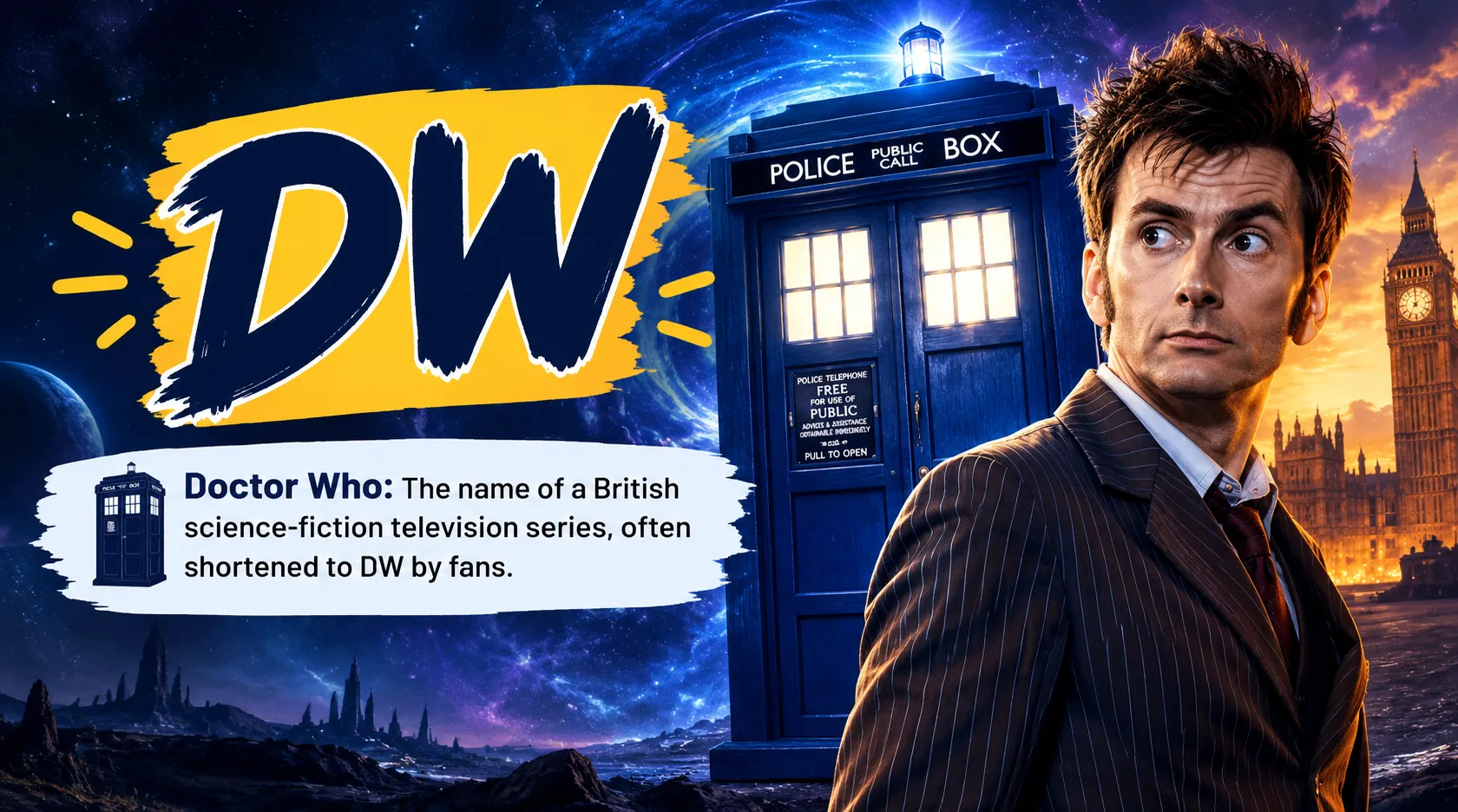
Have you ever received a message like “dw, everything is fine” and wondered what DW means? If you see this short form in a text, Snapchat message, Instagram comment, or online chat, you may not know how to understand it.
The good news is that DW is easy to understand once you know the context.
People often use short forms to save time and make messages sound more natural. DW is one of those common texting abbreviations.
It can help someone comfort a friend, reduce worry, or keep a conversation short. However, its meaning can change depending on the words around it and the situation.
If you are searching for what does dw mean in text 3, you may be looking for three possible meanings of DW or trying to understand a message someone sent you.
In everyday texting, the most common meaning is “don’t worry.” Other meanings can appear in specific conversations, including “dear wife” and “Doctor Who.”
In this guide, you will learn the main meanings of DW, how people use it on social media, how to respond, and how to avoid misunderstandings. By the end, you will be able to understand DW more confidently in different conversations.
What Does “DW” Mean in Text?
DW most commonly means “don’t worry” in text messages. People use it to reassure someone, calm their fears, or tell them that a problem is not serious. Depending on the conversation, DW can also mean “dear wife” or refer to “Doctor Who,” a popular television series. The surrounding message usually makes the intended meaning clear.
For example, if a friend says, “Sorry I forgot to call you,” you might reply, “dw, it’s okay.” This tells your friend that you are not upset.
Here are three meanings worth knowing:
- Don’t Worry: The most common meaning in everyday texting.
- Dear Wife: A term sometimes used by a married person when talking about their wife.
- Doctor Who: The name of a British science-fiction television series, often shortened to DW by fans.
The first meaning is the one you are most likely to see in casual messages, especially when someone wants to make another person feel better.
The Most Common Meanings of “DW”
DW can have different meanings in different situations. Understanding the topic of the conversation is the easiest way to work out what someone means.
1. DW Means “Don’t Worry”
“Don’t worry” is the most common meaning of DW in texting. People use it when they want to tell someone not to feel stressed, guilty, or afraid about something.
It is common among friends, family members, couples, and people who chat online.
Examples:
- “dw, I’ll bring your book tomorrow.”
- “DW about the test. You’ll do great.”
- “Sorry for the late reply.” “Dw, I was busy too.”
- “I think I made a mistake.” “Dw, we can fix it.”
In these examples, DW makes the conversation shorter while keeping the message friendly.
When should you understand DW this way?
Look for messages about mistakes, delays, apologies, plans, or problems. If the sender is trying to calm someone down, DW probably means “don’t worry.”
2. DW Means “Dear Wife”
In some online communities and personal conversations, DW can stand for “dear wife.” A person may use it when talking about their wife in a family discussion, parenting forum, or marriage-related conversation.
This meaning is less common in everyday texting than “don’t worry.”
Examples:
- “My DW planned our anniversary dinner.”
- “I need to ask my DW before booking the trip.”
- “My DW loves watching old movies.”
Here, the sender is talking about their wife rather than telling someone not to worry.
When should you understand DW this way?
Look at the subject of the message. If the person is discussing marriage, family plans, or something their wife did, “dear wife” may be the intended meaning.
However, not everyone uses this abbreviation. Some people simply write “my wife” because it is clearer.
3. DW Refers to “Doctor Who”
DW can also refer to Doctor Who, a British science-fiction television series. Fans sometimes use the abbreviation when discussing episodes, characters, stories, or the show’s history.
In this context, DW is not a comforting phrase or a reference to someone’s wife. It is simply a shortened name for the show.
Examples:
- “I watched an old DW episode last night.”
- “Which DW Doctor is your favorite?”
- “I’m planning a DW marathon this weekend.”
When should you understand DW this way?
If the conversation includes television shows, science fiction, episodes, actors, or fictional characters, DW may refer to Doctor Who.
The topic matters more than the abbreviation itself. A message about a TV series is likely to use DW differently from a message about a personal problem.
How Can You Tell Which Meaning Is Correct?
Use the surrounding words to find the intended meaning.
| Message | Likely meaning |
|---|---|
| “Dw, it’s not your fault.” | Don’t worry |
| “My DW is coming home soon.” | Dear wife |
| “Let’s watch DW tonight.” | Doctor Who |
These examples show why you should not assume that every abbreviation has only one meaning. When a message is unclear, ask the sender what they meant.
How “DW” Is Used in Real Conversations
DW appears in many types of online communication. Its meaning often stays the same, but the tone can change based on the platform, relationship, and situation.
Friends & Casual Texting
Friends commonly use DW to make conversations quick and relaxed. It can help someone feel better after an apology or show that a small mistake is not a problem.
For example:
Friend 1: “Sorry, I forgot to send you the notes.”
Friend 2: “Dw, I’ll get them from someone else.”
Here, DW means “don’t worry.” The second friend is saying that the mistake is not a big issue.
Another example:
Friend 1: “Are you mad at me?”
Friend 2: “No, dw about it.”
This response can help reduce tension and keep the conversation friendly.
You may also see DW used when discussing plans:
Friend 1: “I’m running five minutes late.”
Friend 2: “Dw, take your time.”
In casual chats, DW is useful because it communicates reassurance without requiring a long response.
Instagram & Snapchat
On Instagram and Snapchat, people often use short forms in direct messages, story replies, and comments. DW fits this style because it is quick to type and easy to recognize.
For example:
- “Dw, your story looks good.”
- “I didn’t mean to send that message to you.” “Dw lol.”
- “Dw, I’ll reply to your snap later.”
In these situations, DW usually means “don’t worry.” It can make a reply feel relaxed and friendly.
However, the meaning still depends on the conversation. If someone is discussing a television show or sharing a post about Doctor Who, DW may refer to the series instead.
Do not assume that a short message is rude simply because it contains an abbreviation. Many people use short forms because they are typing quickly or chatting casually.
Dating Apps
DW can appear on dating apps when one person wants to reassure the other. Dating conversations sometimes involve nervousness, delayed replies, misunderstandings, or concerns about making a good impression.
For example:
Person 1: “Sorry, I don’t always know what to say on here.”
Person 2: “Dw, we can take it slow.”
In this example, DW helps create a relaxed atmosphere.
Another example:
Person 1: “I hope I didn’t make things awkward.”
Person 2: “Dw, you’re fine.”
This response suggests that the sender does not see a serious problem.
Does DW mean someone likes you romantically? Not by itself. It can show kindness, patience, or a friendly attitude, but it is not a clear sign of attraction. Look at the rest of the conversation and how the person treats you over time.
Gaming & Online Communities
Gamers and members of online communities often use abbreviations to communicate quickly. DW may appear in team chats, group messages, gaming servers, or discussions about entertainment.
For example:
- “Dw, I’ll help you complete the next level.”
- “Dw, we can try the mission again.”
- “DW has some great episodes.”
The first two examples use DW to mean “don’t worry.” The third may refer to Doctor Who if the conversation is about television.
In a game, a teammate might use DW to calm another player after a mistake. It can mean that the team is ready to try again rather than blame someone.
Still, tone matters. A person who writes “dw” may be reassuring you, but a person who repeatedly dismisses your concerns might be using the phrase in a less helpful way.
Work or Professional Chat
DW may appear in workplace messages between colleagues who communicate informally. For example:
Coworker 1: “Sorry, I sent the wrong file.”
Coworker 2: “Dw, please send the correct one when you can.”
Here, DW means “don’t worry.” The message is relaxed but still includes a clear request.
Another example:
Coworker 1: “I may be a few minutes late to the meeting.”
Coworker 2: “Don’t worry. We’ll get started shortly.”
In professional communication, writing the full phrase is often better. DW may be suitable in a casual team chat, but it can seem too informal in an email to a client, manager, or new business contact.
For important workplace messages, use clear language that everyone can understand.
Is “DW” Rude, Flirty, or Offensive?
DW is generally not rude, flirty, or offensive. Its most common meaning, “don’t worry,” is usually intended to reassure someone. However, the tone depends on the situation, the relationship, and the rest of the message.
When DW Feels Positive
DW often feels positive when someone uses it to comfort you or show that a small mistake is not a problem.
Examples:
- “Dw, everyone makes mistakes.”
- “Dw, I’ll wait for you.”
- “Dw, you can tell me what happened.”
These messages sound supportive because the sender is trying to reduce stress or offer help.
When DW Can Feel Dismissive
Sometimes, DW may feel dismissive if someone uses it to end a serious conversation without listening.
For example:
You: “I’m really worried about what happened yesterday.”
Other person: “Dw.”
This reply may feel too short because it does not address your concern. The person might be busy, unsure what to say, or simply trying to reassure you. You cannot know their intention from the abbreviation alone.
A longer response, such as “I understand why you’re worried. Do you want to talk about it?” would provide more support.
Can DW Be Flirty?
DW is not a flirting abbreviation by itself. However, it can appear in a flirty conversation.
For example:
You: “Sorry, I was nervous talking to you.”
Them: “Dw, you’re cute when you’re nervous.”
The flirty tone comes from the full message, not from DW alone.
Is DW Offensive?
No, “don’t worry” is not offensive in normal use. The abbreviation itself is harmless in most everyday conversations.
However, telling someone not to worry can sometimes sound insensitive if they are dealing with a serious issue. In those cases, a caring and thoughtful response is better than a short abbreviation.
How to Respond When Someone Says “DW”
Your reply depends on what the other person is discussing. If DW means “don’t worry,” you can answer casually, humorously, neutrally, or professionally.
Casual Replies
Use these replies when chatting with friends, relatives, or people you know well.
- “Okay, thanks!”
- “Glad you understand.”
- “You’re the best.”
- “Thanks for being cool about it.”
- “Appreciate it!”
Example:
Friend: “Dw, it’s fine.”
You: “Thanks, I appreciate it.”
This keeps the conversation natural and friendly.
Funny Replies
If the conversation is lighthearted, you can use a playful response.
- “Too late, I already worried.”
- “I’ll try, but my brain says no.”
- “Okay, worry mode off.”
- “You saved me from overthinking.”
- “I’ll stop stressing now.”
Use humor only when you know the other person will understand it. Avoid joking when someone is discussing a serious problem.
Neutral Replies
If you want to keep your answer simple, try one of these:
- “Okay.”
- “Got it.”
- “Thanks for letting me know.”
- “All right, thanks.”
- “I understand.”
These responses work when you do not want to continue the topic or need a short, polite answer.
Professional Replies
In a work conversation, choose a reply that sounds respectful and clear.
- “Thank you for understanding.”
- “I appreciate your patience.”
- “Thanks. I’ll take care of it.”
- “Understood. I’ll send the updated file shortly.”
- “Thank you. I’ll make sure it is corrected.”
For example:
Colleague: “Dw, just send the report when it’s ready.”
You: “Thank you. I’ll send it as soon as it’s ready.”
This response acknowledges the message and explains what you will do next.
Common Misunderstandings About “DW”
Even though DW is short, people can misunderstand it when they read the message without considering its context.
Assuming DW Always Means “Don’t Worry”
This is the most common mistake. While “don’t worry” is the usual meaning in texting, DW can have other meanings in discussions about marriage or television.
For example, “My DW loves this show” may mean “my dear wife,” while “Let’s watch DW” may refer to Doctor Who.
Always consider the topic before deciding what the sender means.
Thinking DW Means Someone Is Angry
A short response can sometimes feel cold, especially if you expected a longer answer. However, DW does not automatically mean that someone is angry.
The person may be busy, typing quickly, or trying to reassure you in a simple way.
If you are unsure, look at their other messages instead of judging their mood from one abbreviation.
Believing DW Is Always Flirty
Some people use DW in conversations with a crush, but the abbreviation itself does not express romantic interest.
A friendly response is not always a romantic signal. Look for other signs, such as whether the person starts conversations, asks about you, or clearly expresses interest.
Confusing DW With Similar Abbreviations
DW is easy to mix up with other short forms, especially if you are new to texting slang.
- DM: Direct message.
- DWB: Depending on the community, this can have other meanings and should be interpreted from context.
- IDK: I don’t know.
- NVM: Never mind.
- WYD: What are you doing?
These terms serve different purposes. DW usually reassures someone, while the others can ask questions, describe an action, or end a topic.
Taking Every Message Literally
Text messages do not always show tone clearly. A simple “dw” might be caring, neutral, or dismissive depending on the situation.
If the conversation is important, ask a follow-up question rather than guessing what the sender feels.
Similar Slang Terms You Should Know
Learning a few related abbreviations can make online conversations easier to understand.
- NP — No Problem: Used to show that something is not an issue.
- NBD — No Big Deal: Means that something is not very important or serious.
- IDK — I Don’t Know: Used when someone does not have an answer.
- IDC — I Don’t Care: Shows that something does not matter to the sender, although it can sound harsh.
- NVM — Never Mind: Used when someone no longer needs an answer or wants to drop a topic.
- WYD — What You Doing?: A casual way to ask what someone is doing.
- WYA — Where You At?: Used to ask about someone’s location.
- TTYL — Talk to You Later: A casual way to end a conversation.
- BRB — Be Right Back: Tells someone that you will return shortly.
- IMO — In My Opinion: Used to introduce a personal view.
- TBH — To Be Honest: Often used before sharing an honest thought.
- TYSM — Thank You So Much: A friendly way to express gratitude.
These abbreviations can make messages faster to type, but not everyone knows them. When clarity matters, writing the full phrase is often the safest choice.
When You Should Avoid Using “DW”
DW is useful in casual conversations, but there are situations where writing the full phrase is a better choice.
Professional Settings
Avoid relying on abbreviations in formal emails, business proposals, job applications, or messages to people you do not know well.
For example, instead of writing:
“DW, I’ll fix the report.”
Write:
“Don’t worry. I’ll correct the report and send you the updated version.”
The full sentence sounds more professional and makes your meaning clear.
Cross-Cultural Chats
People from different countries and language backgrounds may not recognize DW. Even fluent English speakers may be unfamiliar with some internet abbreviations.
If you are speaking with someone who may not know the term, write “don’t worry” instead. This reduces confusion and helps the conversation flow smoothly.
Sensitive Situations
Avoid using only DW when someone is upset, grieving, anxious, or dealing with a serious problem.
For example, if a friend says they are having a difficult day, replying only “dw” may make them feel that you are ignoring their feelings.
A more caring reply would be:
“I’m sorry you’re going through this. I’m here if you want to talk.”
You can still use DW in a supportive message, but make sure your response matches the seriousness of the situation.
When You Need to Be Specific
If someone is asking for instructions, discussing an important deadline, or trying to solve a problem, an abbreviation may not provide enough information.
Instead of writing “dw,” explain what will happen next.
For example:
“Don’t worry. I’ll call the office tomorrow and update you afterward.”
Clear messages help prevent misunderstandings.
FAQs
1. What does DW mean in text messages?
DW most commonly means “don’t worry.” People use it to reassure someone, reduce stress, or show that a small mistake is not a problem.
2. What does DW mean from a girl?
When a girl texts DW, she usually means “don’t worry.” It may show that she is being friendly or reassuring, but it does not automatically mean she likes you romantically.
3. What does DW mean from a guy?
When a guy sends DW, it usually means “don’t worry.” He may be trying to calm you down, accept an apology, or tell you that something is fine.
4. Does DW mean don’t worry?
Yes. “Don’t worry” is the most common meaning of DW in everyday texting, social media messages, and casual online conversations.
5. What does DW mean on Snapchat and Instagram?
On Snapchat and Instagram, DW usually means “don’t worry.” People often use it in direct messages, story replies, and casual chats to reassure someone quickly.
6. Does DW mean dear wife?
Yes. In some family, marriage, and online discussion groups, DW can mean “dear wife.” The surrounding conversation usually makes this meaning clear.
7. Is DW rude or flirty?
DW is generally neither rude nor flirty. It usually means “don’t worry.” The tone depends on the full message, the relationship between the people, and the situation.
Final Thoughts
DW is a common texting abbreviation that usually means “don’t worry.” People use it to comfort friends, accept apologies, reduce stress, and keep conversations short. In some situations, it can also mean “dear wife” or refer to the television series Doctor Who.
The easiest way to understand DW is to look at the message around it. If someone is apologizing or feeling worried, “don’t worry” is probably the right meaning. If the conversation is about marriage or television, another interpretation may fit better.
Remember that DW is not automatically rude, flirty, or offensive. Its tone depends on how and when someone uses it. If you are unsure, ask a simple question instead of making assumptions.
Once you understand DW and similar abbreviations, reading texts and social media messages becomes much easier. Use slang when it feels natural, and choose clear, complete words whenever the situation calls for them.

Ethan Parker is a creative content writer passionate about pets, animals, and unique name ideas. He loves creating fun and engaging content that helps readers discover the perfect names with ease.